
Soul of a Traveler
January 21, 1941
Dear Friends:
Our little Barbara passed away peacefully in her sleep Saturday night, January 18. She was eight years and two months old.
Barbara, after feeling poorly in November, was taken ill on December 6, 1940, with acute lymphatic leukemia – an ailment for which there is at present no cure.
We did all in our power to help her. From everywhere in America came offers of aid, and the beautiful and unselfish contacts which we made shall never be forgotten. Until sometng like this comes up, one does not realize how many friends one has. Especially to such persons as Barbara’s nurse,Mrs. Walker; to our landlady in Los Angeles, Mrs. Reed; and to Dr. Smiley, we owe thanks more than can ever be expressed.
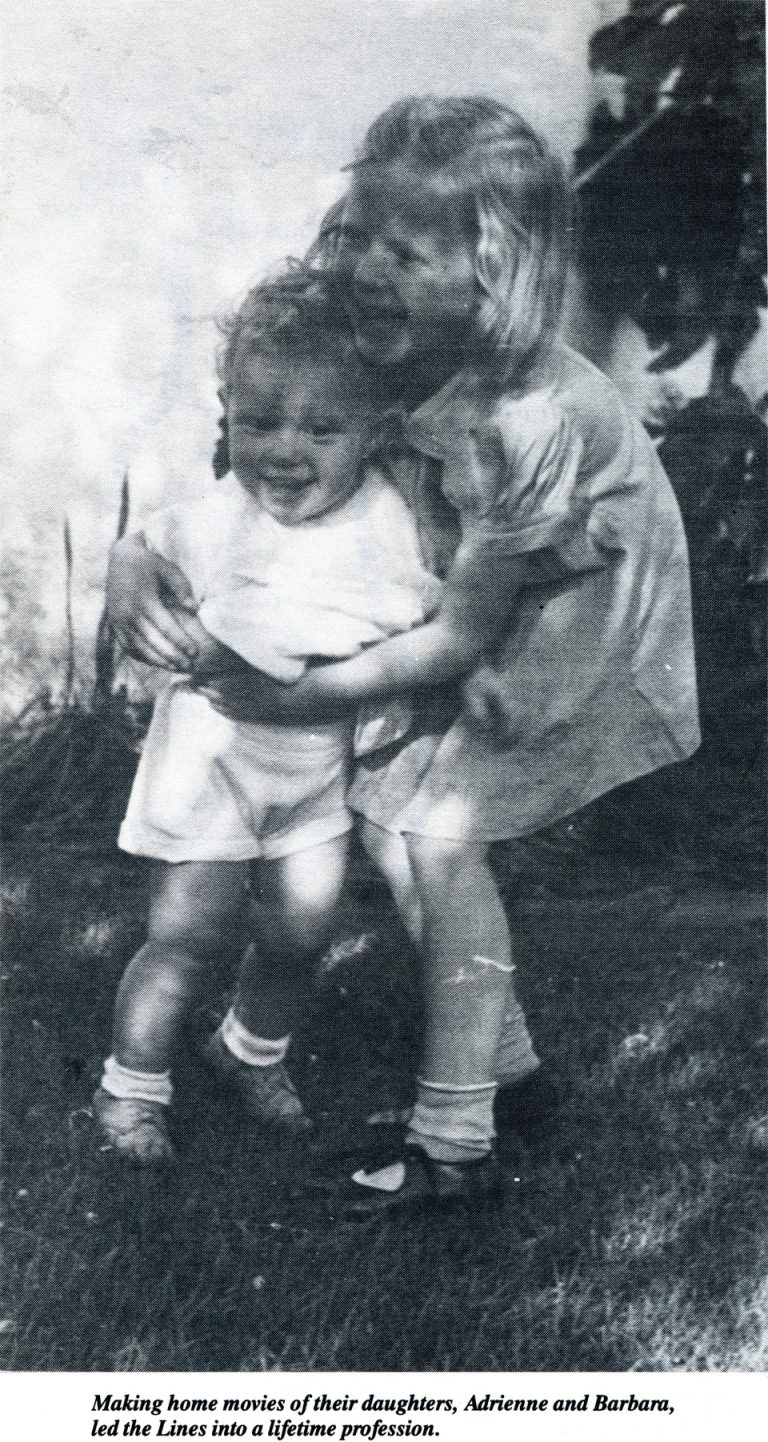
Our past six weeks with Barbara have perhaps been the most beautiful we have ever spent. Throwing all other cares aside, we have read together, played games, taken. pictures, and celebrated a Christmas, a New Years, and her daddy’s and grandpa’s birthdays.
Most of the time Barbara was very happy. But there were periods of extreme trial and suffering. have never seen any one more brave than she. Except for one or two occasions, she went through the whole six weeks without a tear. Up to the very last, when asked how she was feeling, Barbara always answered, “I’m just fine.” Our only hope is that we may show a portion of the courage in the rest of our lives, that, she exhibited in her time of greatest trial.
The last words Barbara spoke were: “Where is Adrienne?”
To our friends in Eastern America we want to say that, since this has happened, Helen and Adrienne will accompany me on my eastern lecture tour in February to Michigan and Washington, D.C. We hope to see many of you at that time.
Sincerely,
HELEN & FRANCIS LINE
714E 542 Rosewood Court
Ontario, California
THE SOUL OF A TRAVELER
(A tribute to Barbara, given by her Daddy at the services in the Cathedral of the Foothills, Upland, Tuesday, January 21, 1941.)
Barbara has the soul of a traveler, an her spirit lives today in the lives of hundreds of boys and girls and men and women whom she met in all parts of the world.
Barbara would hate a funeral service as much as do her mother and I. This is not a funeral in any sense of the word,but a happy “bon voyage” for a beautiful little traveler who has lived eight eplendid years of adventure and joy and friendship.
We are profoundly thankful for those eight years. To bring a little girl up to her eighth birthday, to lead her into new paths of life, to see the development of her love for music and poetry and beauty – all of these represent the greatest privileges of living.
Barbara loved Beauty. The principal profession of our whole family in recent years has been the making of travel motion pictures. Wherever we went we have been in search of fine scenes for filming. As we journeyed by auto along the highway of America, or traveled by train through the fields of foreign scenes, Barbara’s eyes were alert every second to the beauty which was unfolding. Each few moments she would cry excitedly: ” There’s a picture, Daddy: ” Her judgment of beauty was good, and when she exclaimed over the charm of a landscape or the vividness of a rural scene, we usually stopped to take it. Some of the finest shots in our pictures have been of Barbara’s choosing. Much of her life has been spent in shearching out beauty and in exclaiming: “There’s a picture, Daddy.”
Barbara loved people. When she was two, and again when she was four, she journeyed with us to eastern America. One summer was spent in Boston. Barbara entered eagerly into the life about her. She became the inseparable pal of two little Boston boys who lived next door to our apartment. So eagerly and earnestly did she enter into their lives that for months after returning home she clung to a quaint Boston accent.
During that summer in New England we took her out to Walden Pond to visit the-quiet woodland spot where Thoreau lived so closely in touch with nature. the “Orchards tfarmhomeh nature. She went to the Old Manse – where Emerson lived near the rude bridge in Concord; she became acquainted with the “Orchards” farnhome of Louise Alcott’s ” Little Women.” She saw Great Stone Face,and the Maine Coast, and the Old Oaken Bucket. And she loved them all.
While Europe was yet peaceful before machines of war began to smirch the sky- Barbara traveled with us across the Atlantic. The tulip fields in Holland were like glorious carpets of life; Kew Gardens in London was filling the world with sunshine.
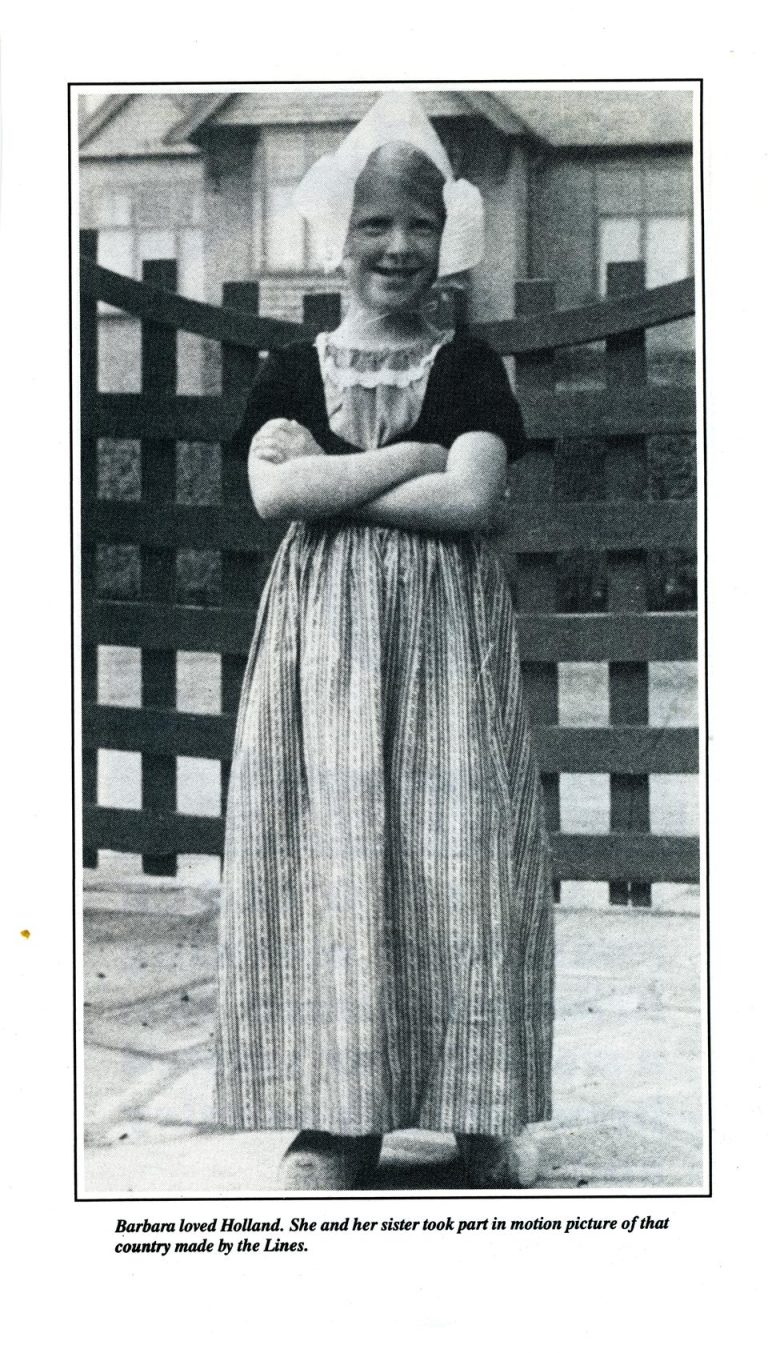
As she traveled across the channel on her first trip to Holland, Barbara became pals with a fine Dutch youth of 22. They became inseparable. He told her about his countr; pointed out to her, as we neared the coast, the first dykes and windmills. Throughout Holland she met and played with the Dutch youngsters in the fields. Their play was an unconscious exchange; a seed of internationalism. As they touched her life with beauty, so did she touch theirs. And Barbara lives today in the hearts of these friends of hers across the sea.
There was a nursery school in London; then later, a glorious two months spent at Kittiwake – a children’s school on the English south toast near Bexhill. Those two months were perhaps the climax of Barbara’s life.. The whole, glorious English countryside to romp ever; excursions to the south coast beaches; most important of all, an individual garden plot which it was her duty to tend each day.
But as always it was the people that counted most. There were sweet little refugee children from Germany and Czechoslovakia, There was an upstanding young boy from India. There were fine little English youngsters. And among this group, Barbara, was the happy little girl from America. While we were gone, Barbara acted as a mother to her little sister, Adrienne.
Mrs. Silcock, owner of the school, was the loveliest woman whom Barbara ever met. At Kittiwake Barbara’s spirit soared high. Again there was beauty to give and to receive. And today Barbara is living in the hearts of these friends of hers across the sea.
Her last big trip was to Hawaii, and we can never forget the Joy of our weeks at Waikiki. Swims three times a day in the soft semi-tropic Pacific;excursions to the pineapple fields and through the pineapple factory; grand trips around the island. Best of all, Manoa Valley, with rainbows- arcs of promise -.hanging constantly above it. This was her favorite spot, But as always, her greatest joy was the friends she met- little Hawaiian youngstets, or Chinese, or Germans, or American boys and girls.
This past Christmas we spent with Barbara in a Hollywood apartment where she was taking treatments. It was the most transcendentally beautiful Christmas which any of us has ever spent. Too many great occasions are dulled in the belief that many more such joys are coming. This Christmas of ours was precious beyond anything which had ever been. because it would be the last of its kind.
A window of our Hollywood apartment looked out toward a high hill to the north. Barbara often looked up at that hill and would say; “Mommy,I wish I knew what was on the other side, Can we go to the top of it someday?’
On the morning that we left to bring her home, the rain was falling hard from an overcast sky. Barbara was bundled into the car. “Mommy,” she said,”can’t we go to the too of the hill now?”
And we went. Following steep, crooked, slippery roads we wound our way up and around, until we could look out and see what lay on the other side.
That yearning of hers came from the soul of a traveler. No greater adventure can there be than to see what lays on the other side.
The fullness of life is not measured in terms of years. There are those who might say that Barbara experienced just eight short years of life. No. Barbara experienced an English spring, a soft Hawaiian summer, a June in the Michigan woods, and an August by blue New Hampshire lakes. Her calendar of time was marked off, not by days, but by experiences She had gained an appreciation of poetry such as is given to few adults, she was peeping into the mysteries of music, she had learned to read, and was beginning to express her thoughts on paper. And she had friends – international friends – for every day in the year. Her calendar was not of years, but of poems and friends and beauty.
Barbara knew and repeated two prayers. One was a prayer of thanks which she learned during her recent illness. It was simple and beautiful!
“We thank you, dear God, for fun and for friends.
We thank you for music and pictures and books.
We thank you for people The showing Your Love
And for work which makes us happy and strong.”
The other prayer was one which she learned at Kittiwake in England – a prayer taught to her by Mrs. Silcock. Every night for two years she has repeated it. It has been our prayer too, each day during my recent five months’ trip in the Orient, I made this prayer a constant part of my thoughts. And this prayer shall forever be our certain assurance that our little daughter Barbara shall be with us always and that her shining spirit shall go or with God forever. This is it:
“Gentle Jesus, meek and mild,
Look upon a little child.
Bless Auntie Silcock and all the little children.
Keep them safe and sound.
Bless Barbara and Adrienne.
Bless Mommy and Daddy, and everybody in the world. Amen
Each evening, after saying this prayer, we would kiss Barbara goodnight and she would always say: “Goodnight, Mommy. Goodnight, Daddy. T’ll be seeing you it the morning.” And we would reply: “Goodnight, Barbara. We’ll be seeing YOU in the morning, too.”
And so we shall.