
Chapter 19: Super Parents Make a Difference
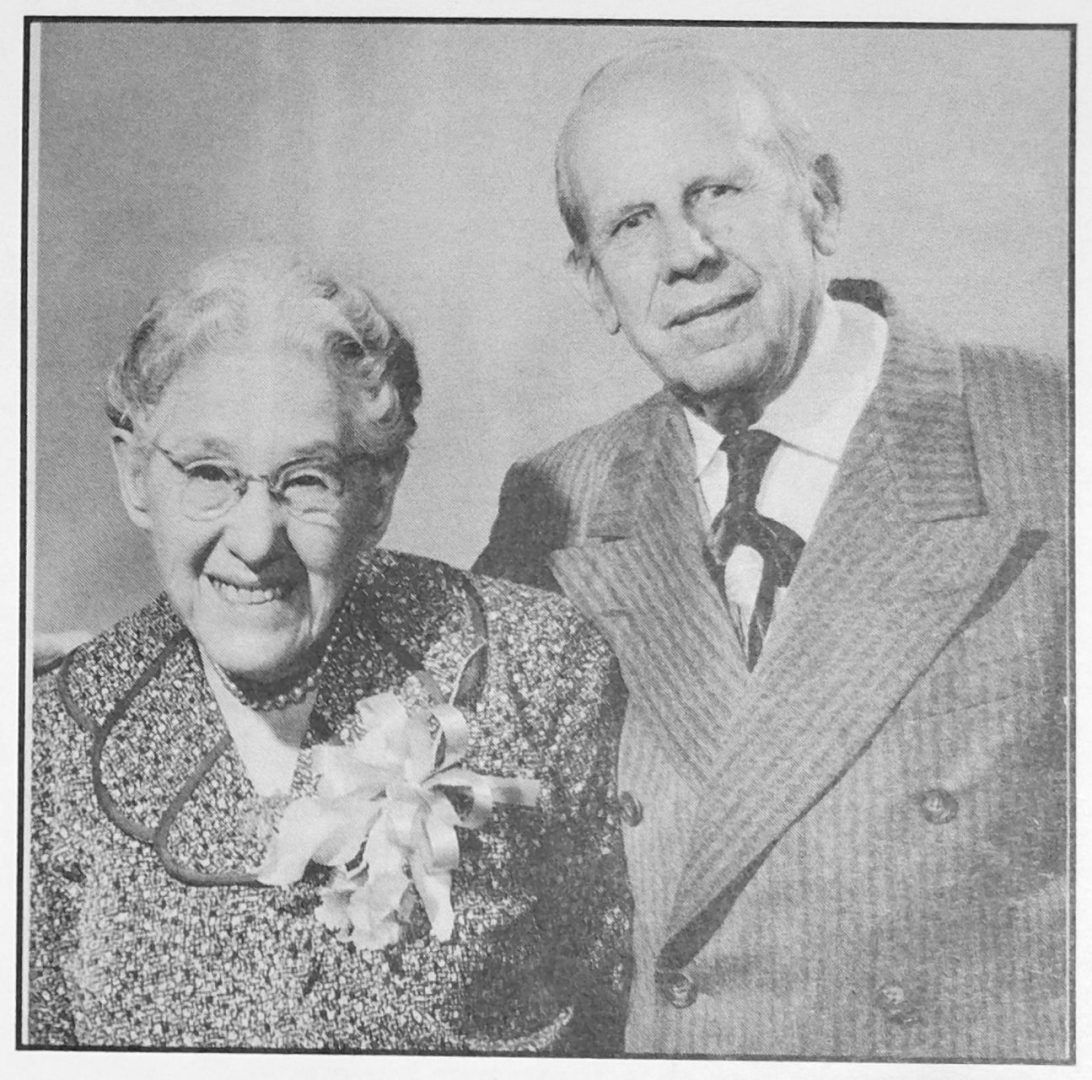
My mother and father were both Super Seniors, not so much because of important achievements as because of illimitable attitudes—toward life and toward parenting. They celebrated their 61st wedding anniversary together; each lived to be 88 years old. My father died in Altadena, California, in 1960. At his memorial service, as also at my mother’s service three years later, I expressed my deepest feelings.
Francis Line’s Talk at C. S. Line Memorial Service
A week before his death, my father asked that I give a little talk at this service and, whether he had asked it or not, I would have wanted to do so. What I wish to say could be summed up in a dozen words: “Few boys ever had a finer father than my brother and I have had.”
My mother and father were naturally good parents, and I use the word “naturally” advisedly. They had advanced ideas on family raising and family life which I’m sure they never got from books. I’ll mention three of these.
Pop always had time for my brother and me. My memories go back to New London, Ohio, where I was born. My father would repeatedly take time from his business to go with my brother and me on walks. We first walked out to Buck Creek or the Vermillion River when I was so small we had to take along a little cart to pull me when I became tired.
At 11, when we were living in Michigan, my father suggested that the three of us take a bicycle trip. So I learned to ride a bike and we took a two-week trip that summer through Michigan, Ohio, then into Pennsylvania to Linesville, our ancestral home. He was 43 years old then, but we rode through mud and rain, and camped out every night. The next year there was another such bicycle trip through Illinois, Indiana, and Wisconsin.
The following year we bought a car. Touring was in its infancy, but we took family trips all over the Midwest.
He helped to get us jobs on a farm in the summer, and during the school year we worked in his store after school and on Saturdays. He was a good boss as well as a father because he taught us discipline and how to work hard.
Once in our youth the papers announced that there would be an eclipse of the sun, something quite rare that most people do not see. The only trouble was that it was wintertime, the roads in those days were poor, and this eclipse was to take place 72 miles north of our home. But we all packed into our car, took a day off, and went up to see the eclipse. Experiences like that make a lasting impression in a person’s life.
The second area was our reading. It was carefully guided, very unostensibly but thoroughly nonetheless. My father had saved some good adventure books from his youth which we enjoyed reading. Nothing was ever said about it, we never thought about it, but we never had any of the horrible blood-and-thunder type of reading or any of the so-called fairy tale types that are filled with gore. This kind of guidance, translated into the monitoring of youngsters’ TV watching today, I think is important.
The greatest gift my father gave to me was continual and everlasting encouragement.
Often I would tackle a thing; I didn’t think I could do it, but he knew I could. His assurance that I could finish the task carried me through. Many times I have done things I thought I couldn’t just because he knew I was able to. Then, after I had done them, not only did he show his confidence but he gave me his praise.
I was back in St. Louis when Helen phoned that my father had passed away. I still had three film presentations to give, but it never occurred to me that I wouldn’t give those because I knew that he knew I was going to give them. That was all there was to it.
This encouragement lasted right up to the time of his passing. The very last words he said to me when I went up to say goodbye to him before leaving for St. Louis were: “You are doing a great work, Francis.” That encouragement was the greatest gift.
He was active, almost up to the end, and now he is free for new adventures. Right now he is probably saying to me, and to others, “Keep up the good work. You can do it.”
Tribute To Our Mother
Memorial Service at our Capistrano Beach Home
December 8, 1963
In the very definition of the word, a memorial service is for the purpose of remembering. When a woman, a wonderful wife and mother, has woven a life into the fabric of America for over 88 years and now has passed the torch on to us who follow, it is important that we pause a moment to remember.
Mom’s life started in Lake City, Minnesota, in 1875 but, in the same year, the family moved to Linesville, Pennsylvania.
Our mother and father were married in 1898 and, four years later, when my brother Winfield was three months old, the doctor told my father he would have to seek a new climate. He was given just six months to live. They moved to Colorado and tried ranching, unsuccessfully, in a frontier environment which tested all the mettle of a young mother with a tiny baby and a husband who was told he would die in six months. They moved back to Ohio, and later to Michigan. Our father lived the six months the doctor had predicted, then on to age 88, adding exactly 60 more years of full living to the doctor’s prediction. Four years ago my parents celebrated their 61st wedding anniversary together.
That’s the chronology. But Mom’s real life isn’t revealed in chronology. I believe that my brother and I had one of the most understanding and most unusual mothers that America has produced. She had faith in us and trusted us completely.
Upon graduating from high school Winfield and I had a feeling of restlessness. Sure, we were going on to college, but we weren’t quite ready.
I’ll never forget that night in our Howell home. Win and I were talking about our restlessness. A huge map of the United States was on our dining room wall.
“Why don’t you take a trip?” Mom said to us. She suggested it, she encouraged it, she helped us plan it. Before that night was over, Win and I and our mother and father had outlined the hiking trip which, in the following 13 months, took my brother and me to every state in the Union.
I wonder now if it was easy for our mother to sit home while her two sons—18 and 19 years old—were out on foot in the rather frontier America of the 1920s. I do know she had complete and absolute faith in us and faith in God’s protection. She prayed us safely through every day of those 13 months.
I have since learned a bit about the cloak of God’s love and protection with which our mother was able to help surround us. The 91st Psalm was her great mainstay. One line of that psalm conveys its theme: “There shall no evil befall thee.”
At the University of Michigan, Winfield became acquainted with a young girl who was an MD, and who was studying for another doctorate in public health. My brother fell in love with her. There was nothing unusual about this, save for one thing. The young girl was of a different race; she was Korean.
“You must do something about it,” Mom’s neighbors said to her. “It must be stopped before it’s too late.” … “Such a marriage could never last.” . . . “It’s up to you to terminate this love affair now.” These were the whispered and spoken advices which flurried around our mother.
It was not easy, in the rather smug climate of a small Midwestern town of the 1920s, to hear these things whispered on every hand. But there was one thing the gossipers didn’t understand. Mom had supreme faith in her son and in God’s wisdom and care. Our folks blessed that marriage and welcomed a new daughter-in-law into America and into their lives.
Would his people, and her people, accept them? Well, in Korea, Win and Grace have had as their personal friends most of the significant leaders, from President Syngman Rhee on down. In America, they have entrée in the nation’s capital. During World War II Grace was a valuable aid to the government. She spoke Japanese as well as Korean and acted as translator, and as teacher for many army personnel. In the Korean War she was also of invaluable assistance.
In Palm Springs, where they live, they are the personal friends of such leaders of American life as the Wurlitzers, the Hormels, the Hoovers, the Peakes, and of writers, literary people, artists. They are both licensed pilots and once took Aldous Huxley up in their tiny private plane. “Why he risked his life at our hands,” Win has often wondered.
And to that little Midwestern town of Howell, Grace brought her sister and Korean husband, who had five children.
Those children became prize pupils in the Howell schools, among the most-loved citizens of the community. Now those five Korean youths—nephews and nieces of Grace and Win—are starting, or are about to start, college. One is studying in France, another is an honor student at the Massachusetts Institute of Technology; all are leaders for a better future.
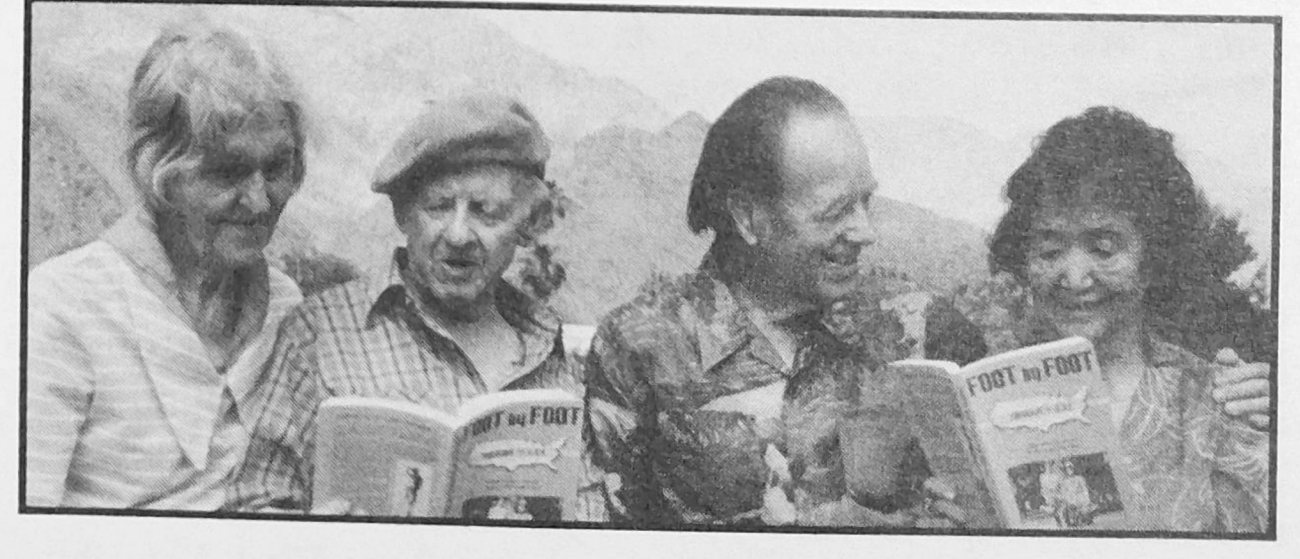
During and after the Korean War, Win and Grace carried on a movement of relief and rehabilitation for Korea such as probably no single couple have ever duplicated for that nation in need. They formed a charitable foundation and invited their wealthy Palm Springs friends to aid them in helping dozens of Korean students to study in this land.
How different—how tragically poorer—the whole world would have been if our mother had listened to the whisperings and advice of her time and tried to stop that love affair.
Mom, with very little formal education, was at least half a century ahead of her time in aspects of true child psychology and enlightened motherhood. And equally so in respect to healthful diet and nutrition.
In the spiritual realm she was a century ahead of her time or, as one thinks more deeply on it, she may have been behind her time, approximately 2000 years behind. For 2000 years ago Christ said things like these: Ask and it shall be given you. Do not fear; only believe. Go and heal the sick. Our mother believed and acted on these precepts.
My mother told me recently that when I was a few months old she and a friend of hers tried an experiment. She would make up a song in which she poured out her deepest desire that her son would become a creative person. Night after night she would sing that song over my cradle.
Last Mother’s Day I didn’t give her a present; there was nothing she needed. I just wrote a five-page letter in which I related some of the things I am saying today. And I thanked her for making up and singing that song over my crib.
As we look out the window toward the ocean we may see some birds flying south, for this is the season of migration. The miracle of migration was one of Mom’s greatest interests. The Great Migration, the last book I bought her, at her request, concerned the mysterious travel of birds.
The three great adventures of life are birth, marriage, and this great final migration when one passes on to new mansions. Mom has come to this last great adventure. The time of the final adventure is always a good time to pause a few moments, to think about the miracle of life and of our responsibilities and relationships to it.
I want to close by reading one verse from First Timothy, because it applies to her: “I have fought a good fight, I have finished my course, I have kept the faith.”